I pass the feeder and yell, Grackle party! And then an hour later I yell, Mourning dove afterparty! (I call the feeder the party and the seed on the ground the afterparty.) I am getting so good at watching that I’ve even dug out the binoculars an old poet gave me back when I was young and heading to the Cape with so much future ahead of me it was like my own ocean. I yell, Tufted titmouse! and Lucas laughs and says, Thought so. But he is humoring me, he didn’t think so at all. My father does this same thing. Shouts out at the feeder announcing the party attendees. He throws out a whole peanut or two to the Steller’s jay who visits on a low oak branch in the morning. To think there was a time I thought birds were kind of boring. Brown bird. Gray bird. Black bird. Blah blah blah bird. Then, I started to learn their names by the ocean and the person I was dating said, That’s the problem with you, Limón, you’re all fauna and no flora. And I began to learn the names of trees. I like to call things as they are. Before, the only thing I was interested in was love, how it grips you, how it terrifies you, how it annihilates you, and resuscitates you. I didn’t know then that it wasn’t even love that I was interested in, but my own suffering. I thought suffering kept things interesting. How funny that I called it love and the whole time it was pain.•
Tag: The Guys
-

Bloodline
BY C. DALE YOUNG
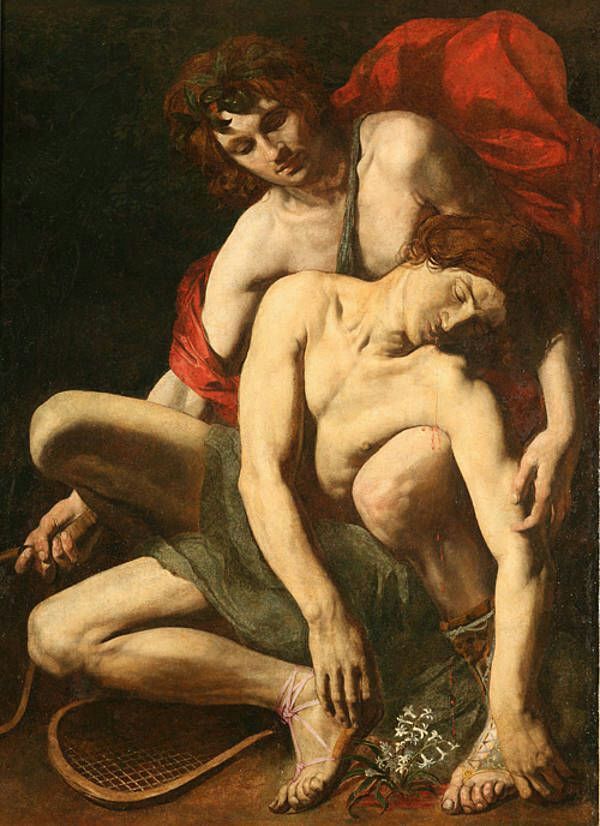
In that old story, the boy is depicted as delicate,
lithe, and beautiful. Ovid had it wrong.
Yes, the boy was beautiful, beautiful enough
to capture a god’s attention, but he was not
delicate. He was anything but delicate,
his muscles toned from working the fields.
Listen to me; the gods are fairly conventional.
A lovely woman is transformed into
an old hag, a too-slow voyeur becomes
the quick stag to be chased and shot through
by a single arrow. So, in the case of this young man,
he must have been strong, anything but delicate
like these flowers. The gods are convincing
when they need to be. Believe me, they are
honey-mouthed and persistent. The boy
had to be strong, but he was not stronger than the gods.
He was seduced; who isn’t seduced by
immortality? In the field, the boy was every bit
the archer as the god. He was just as powerful
with a spear, a slingshot, or a discus.
Ovid writes that Apollo loved the boy,
loved him more than any living thing
on this earth. But we know better.
The gods love only themselves. In the field,
a clearing ringed by trees, the boy did not
try to catch the discus. He was running from it,
running from the god who took pains to aim
so as to slice him clean through with a single shot.
You see, this is not love. A god commanding
spilled blood become delicate blue flowers is not love.